


When you think of a dog park, you probably picture open fields, zoomies, tennis balls, and a bit of happy chaos.
But not every dog wants that.
Some dogs love the zoomies, the chaos, the barking, the running and the full “best day ever” energy. Others? Not so much.
Some dogs need calm. Some need space. Some need a slower adventure where they can sniff, explore, potter, dig, splash and take everything in at their own pace.
That’s exactly what makes Wild River’s sensory garden for dogs so special.
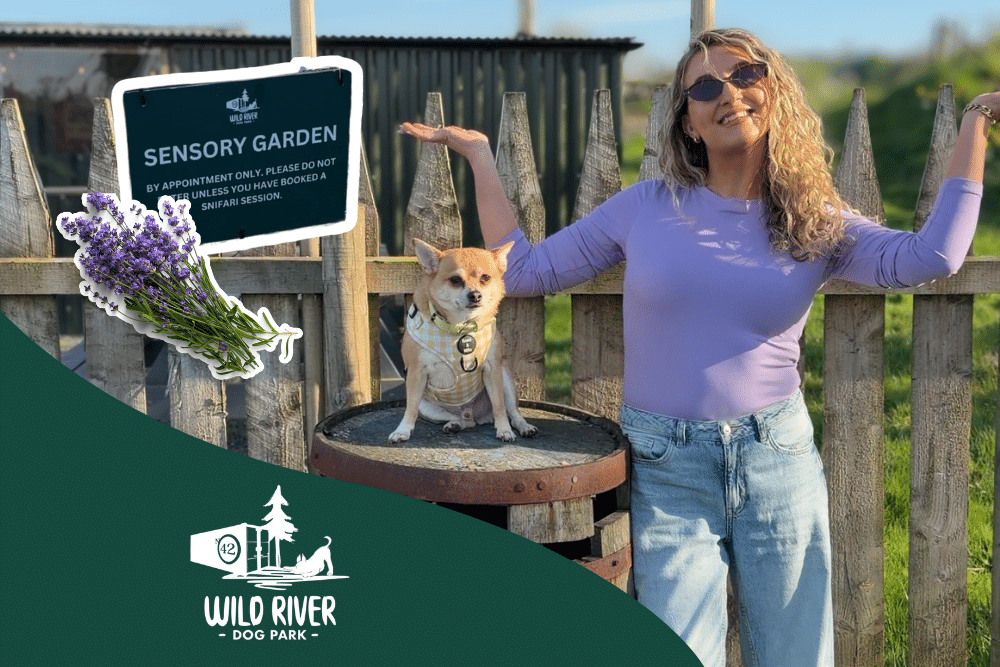
Best Bark was invited along to explore the new space, and what stood out straight away was how much thought had gone into it. This is not just a pretty garden with a few dog-friendly extras. Every plant, texture, scent and activity has been chosen with dogs in mind.
From calming herbs like lavender, to digestion-friendly plants like dill and lemon balm, to sniffing zones, digging spaces, a paddling pool and a ball pit, the whole area has been designed around natural dog enrichment.
It is thoughtful. It is different. And honestly, it is basically a spa day for dogs.
What is a sensory garden for dogs?
A sensory garden is a space designed to stimulate a dog’s senses in a calm and enriching way.
Instead of focusing only on physical exercise, it gives dogs the chance to use their nose, brain and body together. They can sniff different plants, walk over different textures, investigate new smells, dig, splash, forage and simply take their time.
Dogs understand so much of the world through their nose. Sniffing is not just something they do on the side while we impatiently stand there holding the lead. Sniffing is how they process information, relax, investigate and decompress.
A space like this gives them permission to slow down and use their senses properly.
At Wild River, the sensory garden has been built to offer dogs a mix of herbal plants, safe enrichment areas and different sensory experiences, all in one dedicated space.
Why sensory enrichment is so good for dogs
Physical exercise is important, of course. Dogs need movement, freedom and play.
But mental enrichment is just as important.
A dog who has spent 20 minutes sniffing, searching, exploring and making choices can often be just as satisfied as a dog who has been running around a field. Sometimes more so.
Sensory enrichment can help dogs:
- Use their nose and brain
- Build confidence
- Relax in a calmer environment
- Explore at their own pace
- Enjoy natural behaviours like sniffing, digging and foraging
- Experience new textures, scents and spaces
- Feel less pressure than they might in a busy dog park
This is especially useful for dogs who may find normal dog parks too much.
Older dogs, anxious dogs, reactive dogs, smaller dogs, blind or deaf dogs, and dogs recovering from injury or confidence issues may all benefit from a calmer enrichment space.
The herbs and plants in Wild River’s sensory garden
One of the most interesting parts of Wild River’s sensory garden is the planting.
This is where the garden really stands out.
The herbs have not just been chosen because they look nice. Each one has a purpose, whether that is calming, digestion support, fresh breath, stimulation, skin support, natural foraging or simply giving dogs an interesting scent to investigate.
Here are some of the herbs and plants you will find in the garden.
Lavender
Lavender is one of the most well-known calming plants, and it is a lovely addition to a sensory garden for dogs.
At Wild River, lavender has been included for dogs who may be experiencing stress or anxiety. Its calming scent is also known to encourage scar tissue regeneration, making it a thoughtful choice in a space designed around comfort and wellbeing.
For dogs who need a slower, more peaceful environment, lavender adds a gentle scent experience that can help create a calmer atmosphere.
This is especially lovely for anxious dogs, older dogs or dogs who simply prefer a quieter kind of adventure.
Dill
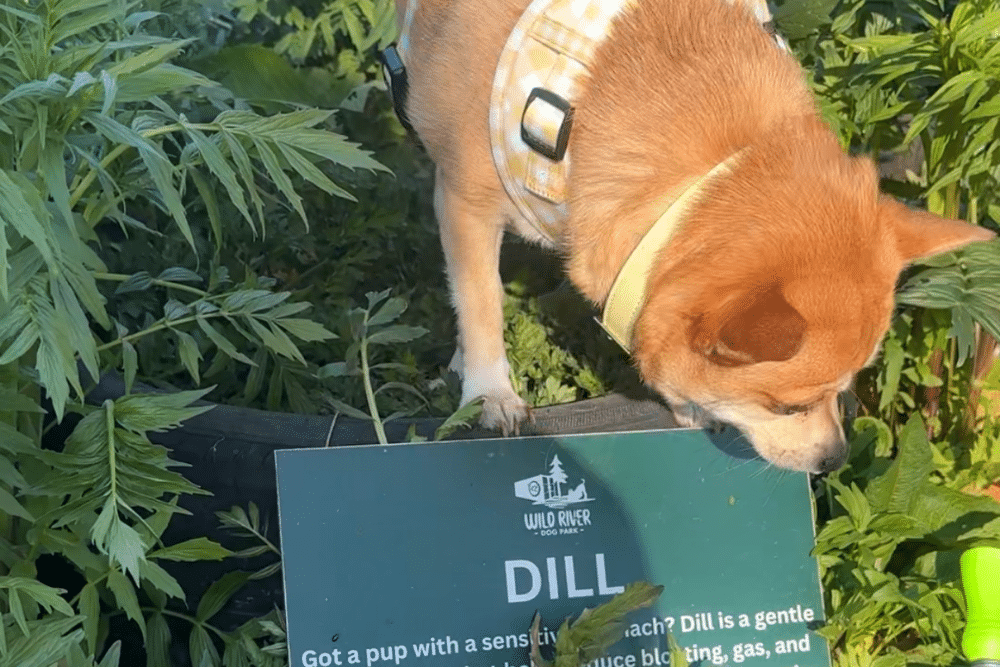
Dill is a gentle herb with several dog-friendly benefits.
At Wild River, dill has been included as a digestive aid. It can help soothe bloating, gas and nausea, and it is also known for its antibacterial properties. On top of that, dill can support oral health and makes a tasty little treat for dogs who enjoy exploring with their nose and mouth.
It is one of those plants many dog owners might not immediately think of as useful for dogs, which is exactly what makes the sensory garden so interesting.
It is not just about what dogs can play with. It is also about what they can sniff, nibble and naturally investigate.
Rosemary
Rosemary is a strong, aromatic herb that brings a lot to the sensory garden.
At Wild River, rosemary is included for its calming and mood-supporting qualities. It is also known as a natural flea repellent and contains antioxidants. Rosemary is often linked with supporting overall wellbeing, and its antimicrobial properties can also aid digestive health.
For dogs, rosemary offers a bold scent experience. It is the kind of plant that encourages a proper nose-first investigation.
In a sensory garden, that matters. Different scents create different levels of interest, and rosemary gives dogs something rich and stimulating to explore.
Marigold
Marigold is included in the garden for its emotional healing properties.
At Wild River, this plant is recognised as being comforting during times when dogs are experiencing grief or emotional distress. It also adds colour, softness and texture to the sensory space, making it both visually appealing and purposeful.
For sensitive dogs, marigold fits beautifully into the idea of a slower, more thoughtful environment.
Marshmallow
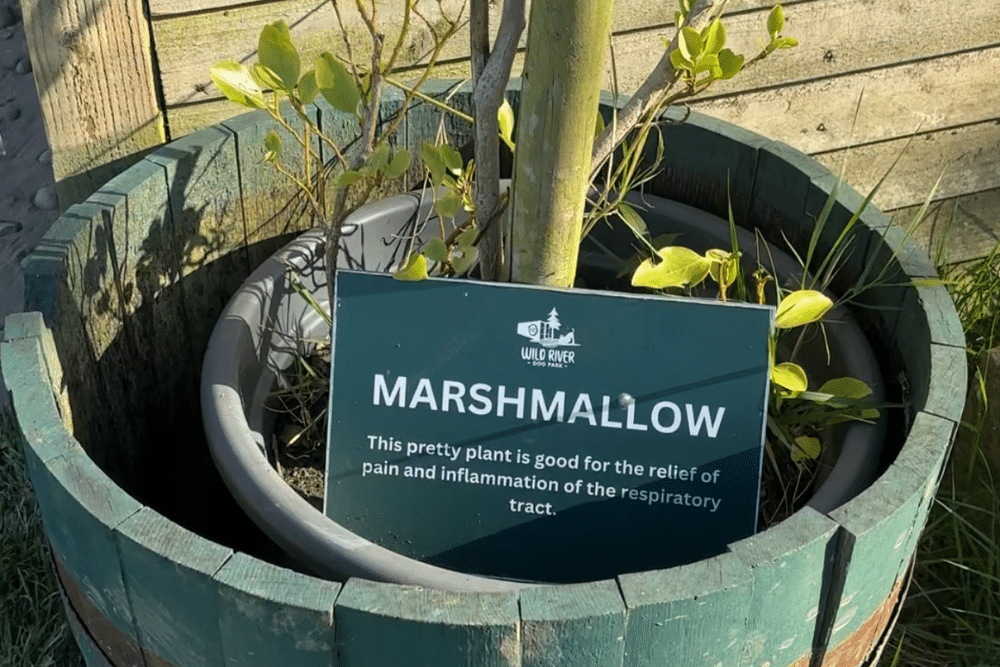
Marshmallow is one of the more surprising plants in the sensory garden.
At Wild River, marshmallow is included for the relief of pain and inflammation of the respiratory tract. It is a plant with a long history of soothing associations, which makes it a thoughtful addition to a garden designed around comfort and wellbeing.
For dog owners, it is also a brilliant reminder that some plants have much more purpose than we might realise.
You might walk past marshmallow and simply think it is a pretty plant. But in this garden, it has been chosen with dogs in mind.
Lemon balm
Lemon balm is a lovely pick-me-up plant for dogs.
At Wild River, it has been included for dogs who need a little boost. Dogs can enjoy sniffing and chewing on the stimulating lemon balm, and it is also said to aid digestion.
This is a great example of how the garden is not only about calming dogs down.
Some dogs do not need less energy. They need the right kind of stimulation. Lemon balm gives them something fresh, interesting and engaging to explore, while still fitting into a calm sensory environment.
It is bright, fragrant and perfect for curious sniffers.
Peppermint
Peppermint is another stimulating and energising plant in the garden.
At Wild River, peppermint is included for dogs who need a little lift. It is also great for cooling dogs with skin irritations, and if your dog takes a nibble, it can even help freshen their breath.
Peppermint has a clear, fresh scent that many dogs will find interesting. It adds a different sensory note to the garden and gives dogs another plant to investigate.
It is refreshing, useful and definitely one for the dogs who like to get their nose right into everything.
Sage
Sage is known as the “thinker’s herb,” and it is a lovely addition for senior dogs.
At Wild River, sage is included for brain health, making it a thoughtful plant for older dogs in particular. It is also known to support digestion, soothe skin and offer natural antibacterial properties.
This is one of the reasons the sensory garden feels so well suited to older dogs.
Not every senior dog wants to run around a busy park. Some want to sniff, wander, explore and enjoy a slower pace. Sage adds to that experience by offering scent, interest and wellbeing benefits in a gentle environment.
Wheatgrass
Wheatgrass is packed full of nutrients and is a great plant for dogs who love to forage.
At Wild River, wheatgrass is included for its antioxidants, organ-cleansing properties, breath-freshening benefits and digestion support. It can also help with constipation, odour control, energy boosting and antiseptic properties.
Lots of dogs naturally love to munch on grass, so wheatgrass gives them something purposeful to investigate.
This is a brilliant part of the garden for dogs who enjoy natural foraging. It lets them explore a behaviour many dogs already love, but in a more intentional space.
Parsley
Parsley is not just a tasty garnish.
At Wild River, parsley is included as a natural breath freshener for dogs. It is packed with vitamins and antioxidants, supports kidney health, helps reduce inflammation and gives dogs a little crunch of green goodness.
For dogs who enjoy nibbling on fresh plants, parsley can be a lovely addition to the sensory experience.
For owners, it is also one of the more familiar herbs, which makes it a nice gateway into understanding how everyday plants can have benefits for dogs too.
Catnip
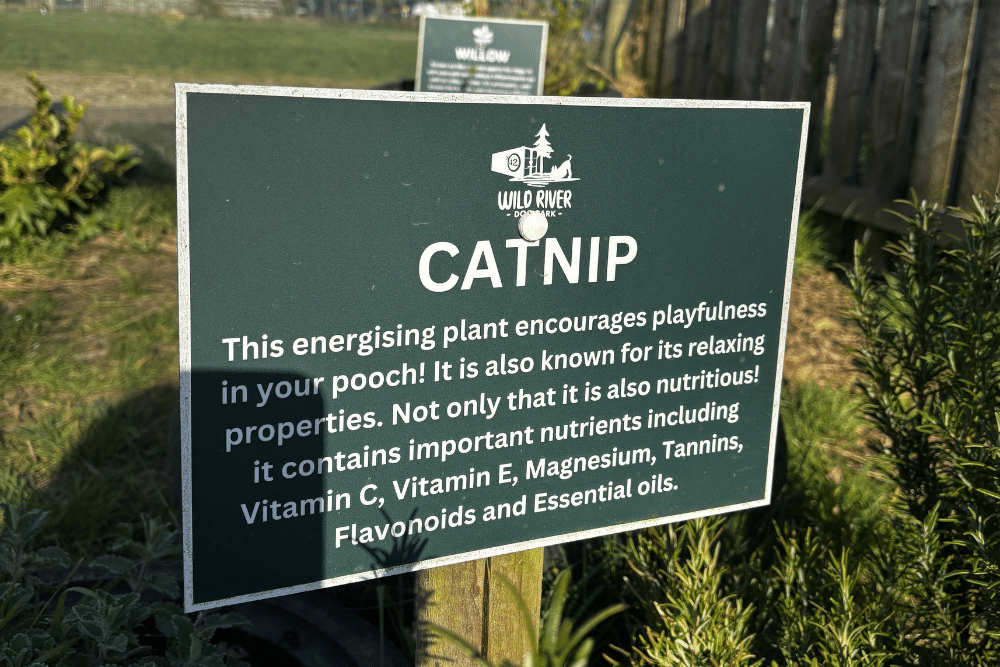
Catnip is not just for cats.
At Wild River, catnip is included as an energising plant that encourages playfulness in dogs. It is also known for its relaxing properties and contains important nutrients including vitamin C, vitamin E, magnesium, tannins, flavonoids and essential oils.
This one is a brilliant conversation starter because many people assume catnip is only relevant for cats.
For dogs, it can offer both playful stimulation and relaxation, depending on the dog. That makes it a really interesting addition to the sensory garden.
Willow
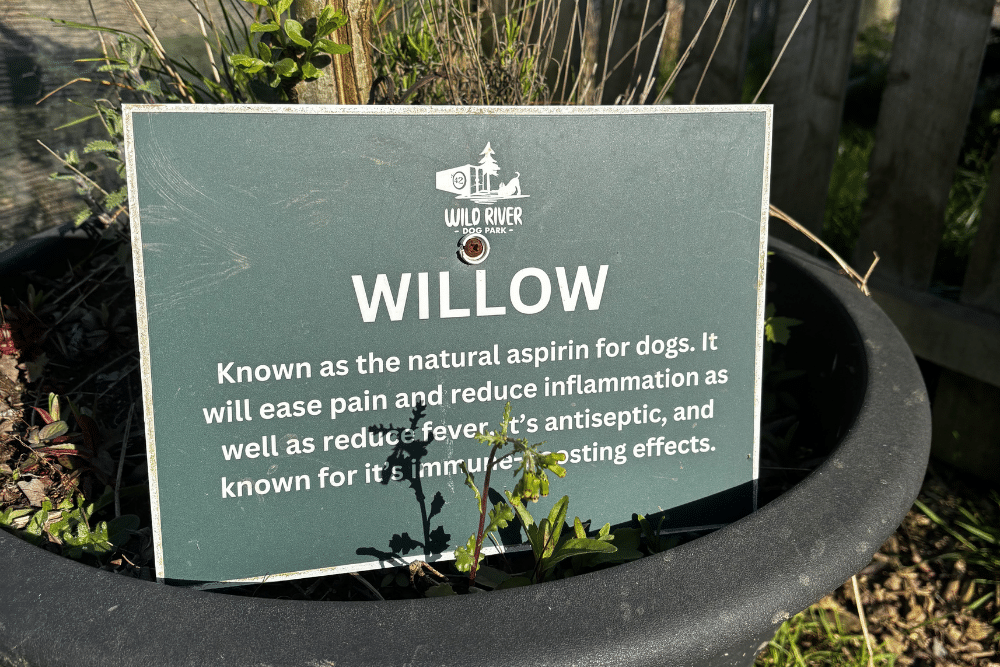
Willow is known as a natural aspirin for dogs.
At Wild River, willow is included for its ability to ease pain, reduce inflammation and reduce fever. It is also antiseptic and known for its immune-boosting effects.
This is one of the more powerful plants in the garden, and it is a great example of how much thought has gone into the space.
That said, owners should always be careful with plants that have stronger medicinal associations. Willow should not be used at home as a treatment without veterinary guidance, especially if your dog is on medication or has existing health issues.
In the sensory garden, it forms part of the wider educational and enrichment experience.
Pansies
Pansies add colour and visual interest to the sensory garden.
At Wild River, they are included because dogs can see the same spectrum of colours as humans, but they are best able to see blues and yellows. This makes pansies a lovely visual addition for dogs, especially when planted in shades they can pick up more easily.
Sensory enrichment is not only about scent.
Colour, contrast, movement and texture all play a part too. Pansies help make the garden more engaging visually, while also adding a cheerful little pop of colour.
More than plants: the enrichment zones
The herbs are a huge part of the sensory garden, but Wild River has gone further than planting.
The space also includes different enrichment zones that encourage natural dog behaviours like sniffing, digging, splashing, searching and gentle play.
This is where the garden becomes more than a pretty planted area.
It becomes an experience.
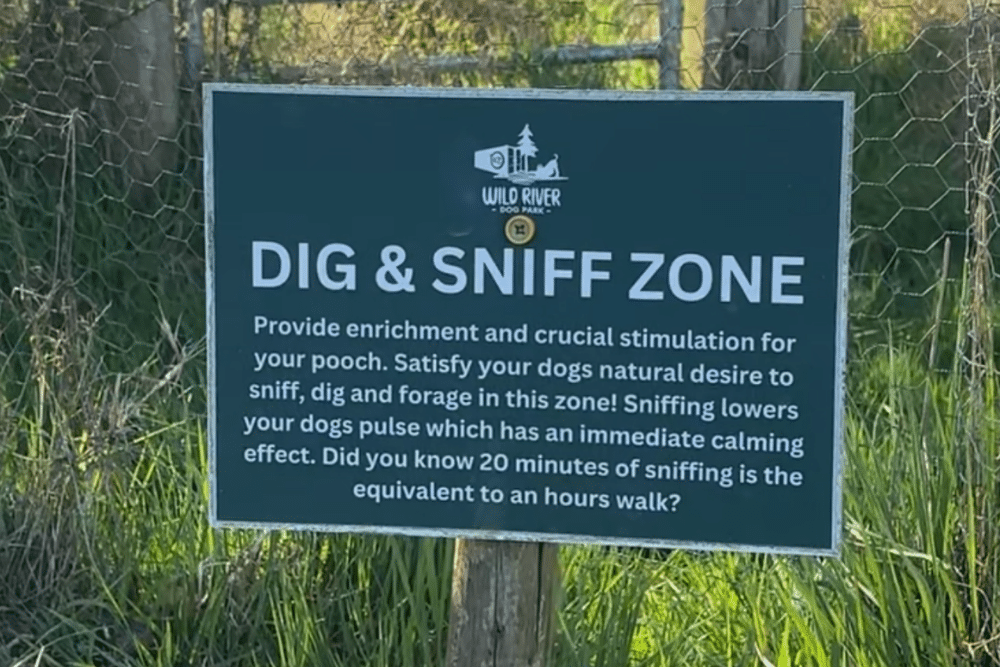
Dig and sniff zone
The dig and sniff zone is designed to provide enrichment and crucial stimulation for dogs.
At Wild River, this area satisfies a dog’s natural desire to sniff, dig and forage. Sniffing can lower a dog’s pulse and have an immediate calming effect, making this zone especially valuable for dogs who need help settling or decompressing.
Digging is also a completely natural behaviour for dogs.
Many owners spend a lot of time trying to stop their dogs digging in the wrong places. So giving them a safe, appropriate place to dig is a brilliant idea.
The dig and sniff zone lets dogs be dogs.
No judgement. No flower beds harmed.
Paddling pool
The paddling pool adds a water element to the sensory garden.
For some dogs, this will be the highlight. They will be straight in, paws first, living their best splashy life.
For others, it might simply be something to sniff, circle around or dip a paw into.
That choice is important.
A sensory garden should never force a dog into one type of activity. It should offer options. The paddling pool gives dogs who enjoy water a chance to cool down, play and experience a different texture under their paws.
Ball pit
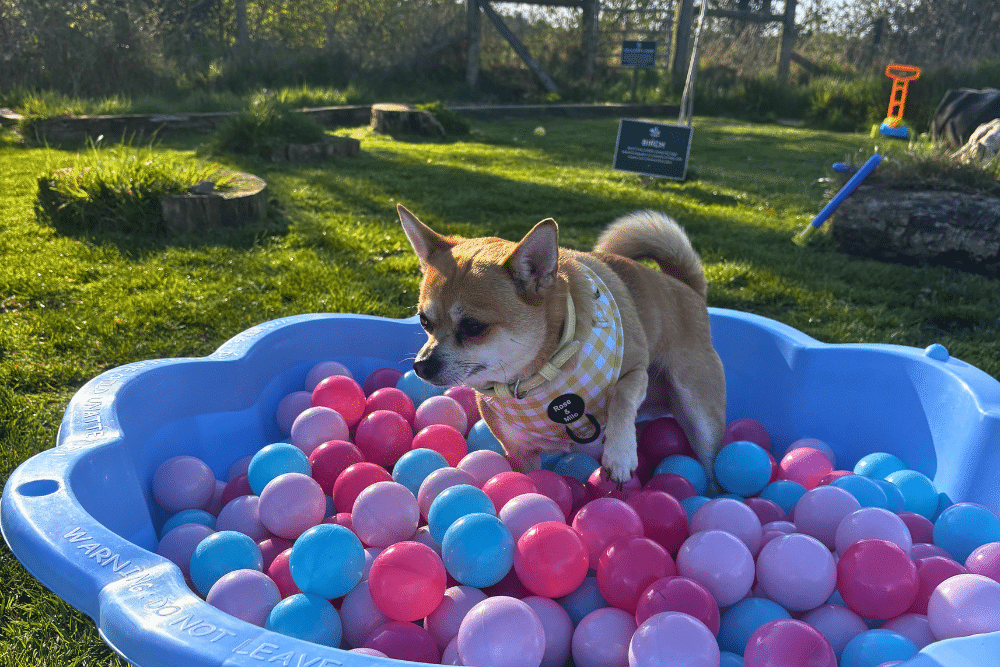
The ball pit adds fun, movement and playful texture.
For dogs who enjoy searching, nosing around or stepping through different surfaces, a ball pit can be a great confidence-building activity. It is playful without needing to be as intense as a busy group play session.
Some dogs will dive right in. Others will take their time.
Both are fine.
The point is that dogs get to choose how they engage.
Different textures, sights and smells
Part of what makes the sensory garden so effective is the mix of textures and materials.
There are plants, soil, grass, tyres, planters, water, digging areas and open sniffing spaces. Each part offers something slightly different for dogs to experience.
For blind or deaf dogs, this kind of space can be especially valuable.
Dogs who experience the world differently may benefit from environments where scent, touch and layout are more important than noise or fast movement. A sensory garden gives them a calmer way to explore.
Which dogs might enjoy Wild River’s sensory garden?
One of the best things about the sensory garden is that it is suitable for dogs who may not always enjoy traditional dog park environments.
It may be especially lovely for:
- Older dogs
- Dogs with reduced mobility
- Dogs who experience pain or stiffness
- Anxious dogs
- Reactive dogs
- Smaller dogs who prefer their own space
- Blind or deaf dogs
- Dogs who find busy parks overwhelming
- Dogs who love sniffing more than sprinting
- Dogs who need confidence-building
- Puppies learning about new sights, smells and textures
- Dogs who benefit from calmer enrichment
Of course, every dog is different.
Some will be drawn straight to the herbs. Some will make a beeline for the paddling pool. Some will discover the digging zone and decide they are never leaving.
That is the beauty of the space.
There is no one right way to enjoy it.
Why this kind of dog-friendly space matters
Dog-friendly does not always mean “let dogs in and hope for the best.”
The best dog-friendly spaces think about what dogs actually need.
Wild River’s sensory garden does exactly that.
It recognises that not all dogs enjoy the same things. Not all dogs want to run with a crowd. Not all dogs feel confident in busy open spaces. Not all dogs are young, fast, social or able-bodied.
Some dogs need gentler adventures.
A sensory garden gives those dogs a place to enjoy themselves without pressure.
It also gives owners a chance to see enrichment differently. A good dog outing does not always have to be a long hike or a high-energy play session. Sometimes it can be a slow sniff through herbs, a little dig in the soil, a paddle in the pool and a quiet wander at their own pace.
That still counts as a proper adventure.
In fact, for some dogs, it is the perfect one.
Visiting Wild River’s sensory garden
Wild River’s sensory garden has been created with dogs at the heart of the experience.
From herbs like lavender, dill, rosemary, lemon balm and peppermint, to the dig and sniff zone, paddling pool, ball pit and digging area, the space is designed to support natural enrichment in a calm and thoughtful way.
Before visiting, check Wild River’s latest booking details, access rules and supervision guidance.
You can also find more dog-friendly places, experiences and verified venues through Best Bark.
A quick safety note
Wild River’s sensory garden is designed for supervised sensory enrichment.
While many herbs and plants are known for dog-friendly benefits, every dog is different. Some dogs may have allergies, sensitivities, medical conditions or medication interactions.
Always supervise your dog around plants and speak to your vet before using herbs medicinally or allowing your dog to eat large amounts of any plant.
The safest starting point is simple:
Let them sniff.
Let them explore.
Let them go at their own pace.
Final thought
Every plant in this garden helps dogs somehow.
But the real magic of Wild River’s sensory garden is not just in the herbs.
It is in the idea behind it.
Dogs deserve spaces that understand them. Spaces that let them sniff, dig, splash, forage, rest, investigate and simply be dogs.
For some dogs, that might look like zoomies in a field.
For others, it looks like a quiet sensory garden full of herbs, textures and calm little moments.
And we think that is pretty special.