
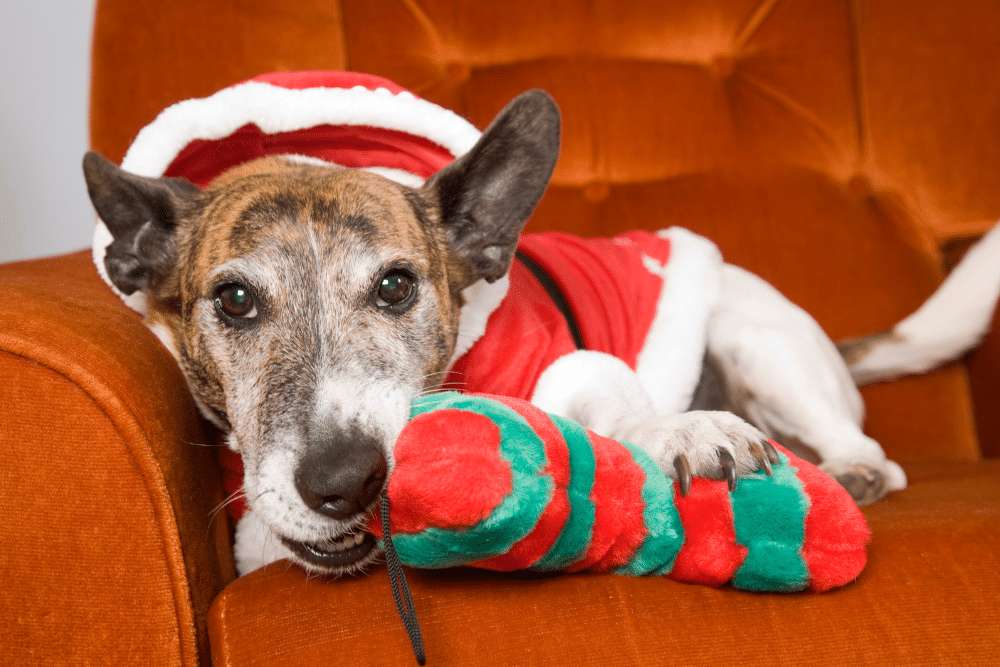
Christmas stockings for dogs are becoming increasingly popular, and there is certainly no shortage of festive toys, chews and treats to choose from.
But before you fill your dog’s stocking this Christmas, I want to draw your attention to a few things that are easy to overlook.
Just because a toy or treat is sold for dogs doesn’t automatically mean it’s suitable or safe for yours. The wrong size, material or type of chew can cause anything from a damaged tooth to a potentially life threatening intestinal blockage.
A recent BBC report shared the heartbreaking story of Cane, a five year old Cane Corso who died after swallowing part of a rope tug toy. His owner is now calling for stronger safety regulations around dog toys.
It’s an important reminder to look carefully at what we’re buying for our dogs, particularly at Christmas when novelty products and gift sets are everywhere.
1. Be careful with rope toys
Rope toys are a popular choice for tug games, but they can become dangerous when dogs start chewing through the fibres.
If strands of rope are swallowed, they can become trapped inside the digestive system. Longer strands are particularly concerning because they can get stuck and cause a ‘telescoping’ of the intestines, potentially causing severe internal damage.
The danger isn’t limited to smaller dogs either, as Cane’s story sadly demonstrates.
I’d advise owners to be particularly cautious with rope toys if their dog has a habit of destroying toys or swallowing pieces.
If you do use one for supervised tug games, check it regularly and remove it as soon as the fibres start coming loose. Never leave a dog alone to chew on a rope toy.
A suitable rubber tug toy may be a better option for dogs that tend to pull toys apart.
2. Check the size of every toy
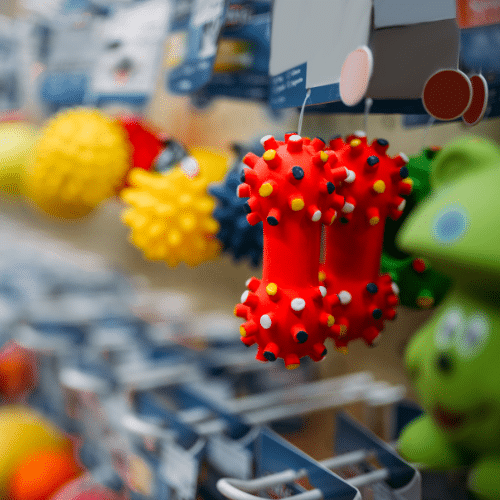
One of the simplest things you can do when choosing a toy is make sure it’s the right size for your dog; A ball that is perfectly suitable for a Chihuahua could be a serious choking hazard for a Labrador.
Balls and other toys that are small enough to fit entirely inside a dog’s mouth can become lodged in the throat.
Look for toys that are too large to swallow, but still comfortable for your dog to carry and play with.
I’d also recommend checking for small detachable parts, particularly on festive novelty toys.
Plastic eyes, squeakers, bells and decorative accessories can all become hazards if a dog manages to pull them off.
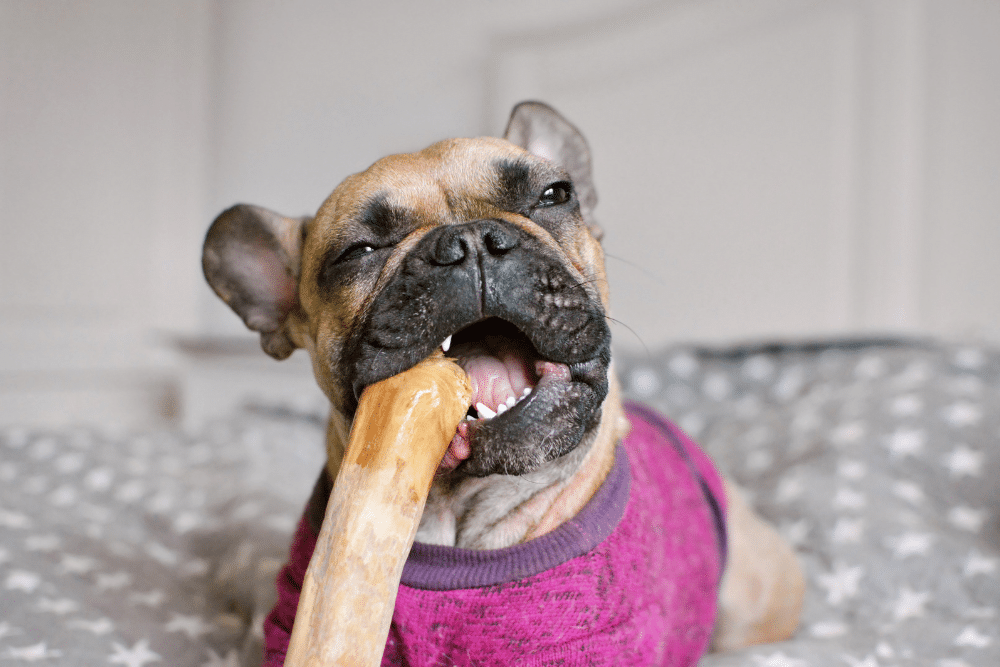
3. Avoid very hard chews, including antlers and bones
Antlers, hooves, bones and other hard chews are often marketed as natural, long lasting treats.
However, some are simply too hard for a dog’s teeth.
I commonly see tooth fractures from dogs biting down forcefully on a hard chew, these can lead to a lot of pain, infection and in many cases tooth extraction.
A useful guide is the fingernail test. If you cannot make a small indentation in a chew with your fingernail, it may be too hard for your dog’s teeth.
For dogs that enjoy chewing, consider a suitably sized, flexible rubber toy or a softer chew designed for their size and chewing habits.
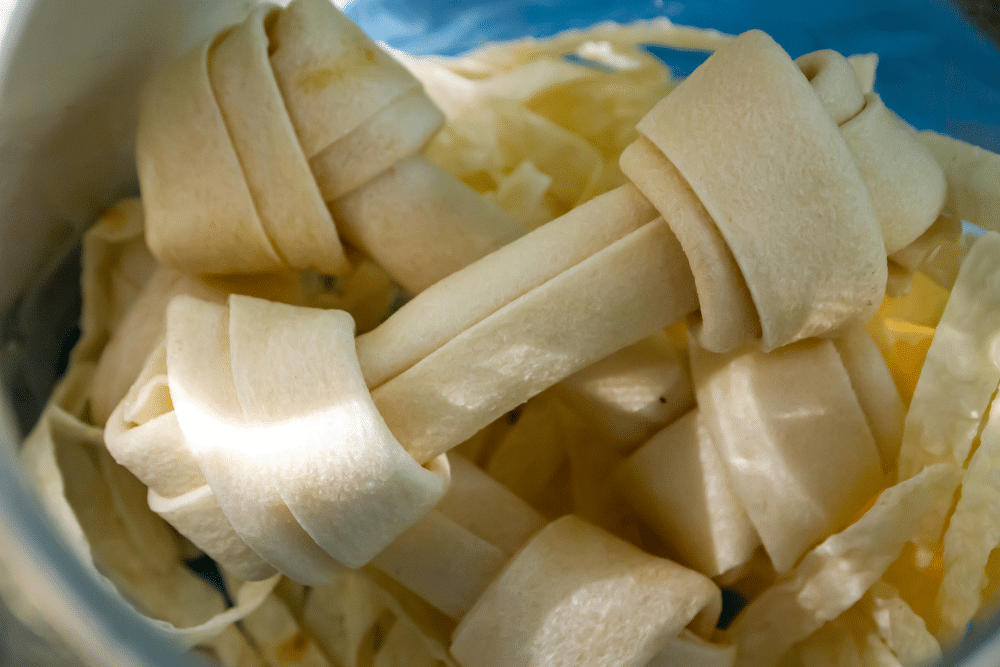
4. Think twice before buying rawhide
Rawhide chews are still widely available, particularly in Christmas stockings and gift packs.
My concern with rawhide is that dogs can tear off and try to swallow large pieces, which may become lodged in their throat. I would generally advise choosing an alternative, particularly for dogs that tend to gulp down treats rather than chewing them properly.
And remember, even a chew marketed as natural or digestible should be given under supervision.
5. Look closely at the treats in Christmas stockings
Festive dog treats can be a nice way to include your dog in the celebrations, but I’d encourage owners to read the packaging rather than choosing something purely because it looks Christmassy.
Check the ingredients, feeding instructions and suitability for your dog’s age and size.
Be particularly careful when buying mixed treat boxes or stockings containing several different products, especially if the individual ingredients and feeding guidance aren’t clearly provided.
Some dogs also have allergies, sensitive stomachs or medical conditions that make particular treats unsuitable.
And don’t forget portion sizes. Treats should generally make up no more than 10% of a dog’s daily calorie intake.
It’s very easy for a few festive extras to add up, particularly for smaller dogs.
Human Christmas treats are a different matter altogether. Chocolate, raisins, sultanas and products containing xylitol, also known as birch sugar, can be toxic to dogs and should be kept well out of reach.
6. Don’t overlook soft toys and squeakers
Soft toys can be perfectly suitable for some dogs, but they aren’t ideal for every type of chewer.
If your dog regularly tears toys apart to get to the stuffing or squeaker, there’s a risk of those materials being swallowed.
Stuffing, fabric and plastic squeakers can cause choking or blockages in the digestive system.
Before buying a soft toy, look at the stitching, check for loose parts and consider how your dog normally plays.
If a toy starts coming apart, remove it rather than allowing your dog to continue playing with it.
7. Know the warning signs of a swallowed toy
Sometimes owners don’t realise their dog has swallowed something until they start behaving differently.
Signs of a possible obstruction can include:
- Vomiting or repeated retching
- Refusing food or suddenly losing their appetite
- Unusual tiredness or lethargy
- A painful or uncomfortable abdomen
- Difficulty passing stools
These symptoms can have other causes, but an intestinal blockage is a veterinary emergency.
If you suspect your dog has swallowed part of a toy, rope or chew, contact your vet immediately, even if your dog seems fine at first.
Don’t attempt to make them vomit at home. If you notice string or rope protruding from their mouth or bottom, never try to pull it out, as this could cause further internal damage.
Early veterinary intervention can make a significant difference.
My advice for Christmas shopping
You don’t need to spend a fortune to find something your dog will enjoy this Christmas.
I’d encourage owners to focus on choosing a toy or treat that suits their individual dog, rather than buying the biggest stocking or most elaborate gift set.
Before buying, ask yourself: Is it the right size? Could any parts break off? Is it too hard for their teeth? And how is my dog likely to play with it?
If you’re unsure about a particular product, speak to your vet before giving it to your dog.
Most importantly, have a lovely, dog-filled Christmas!
Dr Niall Thompson
Veterinary Surgeon, Ashwood Vets
Best Bark’s Resident Vet & Dog Safety Expert
Looking for Christmas presents for your dog? Explore pet shops and accessories and dog food and treats on Best Bark.

About the veterinary expert
Dr Niall Thompson, MVB CertAVP(GSAS) PGCertVPS MRCVS
Dr Niall is a veterinary surgeon at Ashwood Vets, which has practices in Dundonald and Saintfield, Northern Ireland.
He graduated in Veterinary Medicine from University College Dublin in 2014 and holds an RCVS Certificate in Advanced Veterinary Practice in General Small Animal Surgery.
As Best Bark’s Resident Vet and Dog Safety Expert, Dr Niall supports our commitment to providing responsible, reliable dog health and safety information.
Credentials: MVB CertAVP(GSAS) PGCertVPS MRCVS